Muscle Recovery During Sleep

Muscle recovery does not happen in the gym, it happens on the mattress. It is during the hours of deep sleep that the body redirects all its energy to repairing tissue, rebuilding fibres and consolidating the day's physical work.
For those who demand excellence from both their training and their rest, understanding this link is the first step towards investing in a sleep system worthy of that standard.
In this article, we explore the physiology behind this process and how the quality of your mattress directly influences the results you are looking for.
Sleeping badly: the invisible cost to your body
Sleeping badly compromises much more than your energy the next day. When sleep is interrupted or shallow, the body does not reach the deepest stages of the cycle, precisely those in which most cell repair and protein synthesis take place.
For those who train regularly, this deprivation translates into slower recovery, a greater feeling of accumulated fatigue and an increased risk of injury. A demanding body deserves a foundation to match, which is why the choice of mattress stops being a detail and becomes an integral part of the performance strategy.
How deep sleep helps muscle growth
Muscle growth depends largely on the release of growth hormone, a process that peaks precisely during the deep sleep and REM sleep stages. It is during this period that the body:
- Repairs the damage to muscle fibres caused by physical exertion;
- Synthesises proteins essential for rebuilding and strengthening tissue;
- Regulates hormone levels, including cortisol and testosterone, which are fundamental to metabolic balance;
- Consolidates the motor memory acquired during training, optimising coordination in future sessions.
Without sufficiently deep and uninterrupted nights, this process remains incomplete, regardless of the discipline applied to training or diet.
Factors that influence deep sleep
The amount of sleep is not the only relevant factor; its quality matters just as much or more. An active adult needs, on average, between seven and nine hours of sleep a night, but the real benefit for muscle recovery depends on the proportion of deep sleep achieved within that period, usually between 13% and 23% of total rest time.
Factors such as age, the physical demands of training and even body temperature during the night directly influence this proportion. That is why two people with the same number of hours of sleep can have completely different recovery experiences.
Monitoring signs such as morning muscle stiffness, reaction time in the first workouts of the week or irritability at the end of the day can help you understand whether deep sleep is, in fact, fulfilling its restorative function.
The pillars of a good night's sleep
Building a good night's sleep requires consistency in several factors: regular schedules, a dark and cool environment, and reduced stimuli before bed.
However, there is one element that underpins all the others: the surface on which the body actually rests. Support that does not follow the natural curves of the spine or that retains excessive heat interferes directly with the depth of sleep, even when all other conditions are met. That is why, at Monarch Royal Bedding, every piece is designed as part of an integrated sleep system, capable of supporting both the body and its physical goals.
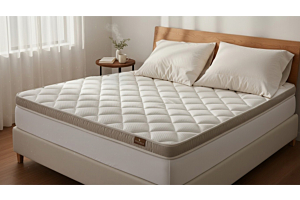
For those who train intensely, pressure-point relief and thermal stability become even more decisive. The Grand Sublime Organic mattress, with its double-sided cotton and wool design, and the technology found in our advanced materials solutions, work together to create a stable microclimate, allowing the muscles to relax completely and the recovery process to take place without external interference.
True physical progress is built both outside and inside the bed. By investing in a sleep system designed down to the last detail, you are protecting what matters most: your body's ability to rebuild itself, night after night, with the precision your lifestyle demands.